
English below: The ocean is breathing for us. Why my first week in Curacao made me incredibly sad.
Eigentlich hatte ich erwartet, dass mich meine erste Woche auf Curaçao vor allem glücklich machen würde.
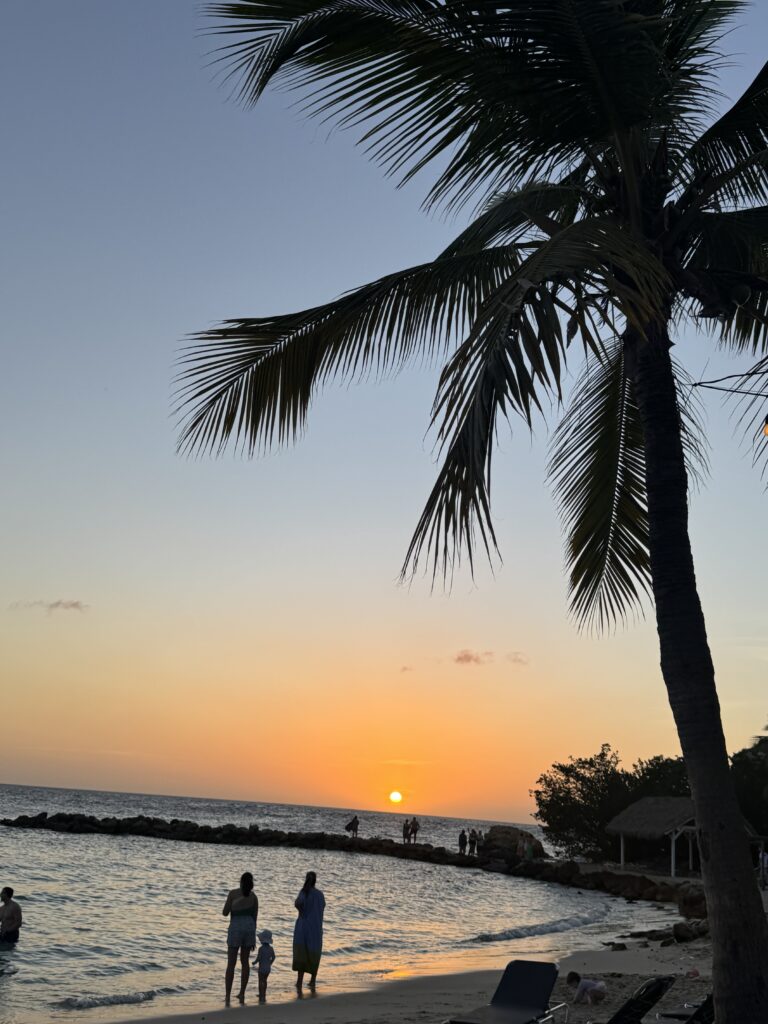
Karibische Strände.
Türkisfarbenes Wasser.
Warme Luft und Palmen.
Und ja – vieles davon ist genau so schön, wie man es sich vorstellt.
Aber gleichzeitig hat mich diese erste Woche auch überraschend traurig gemacht.
Denn zwischen den wunderschönen Stränden und dem glitzernden Meer ist mir hier der überhitzte Zustand unseres Planeten sehr bewusst geworden.
In den letzten Tagen habe ich viele Nachrichten bekommen:
„Wie ist es in Curaçao?“
„Ist es so paradiesisch, wie man sich die Karibik vorstellt?“
Die Antwort lautet: Ja.
Und gleichzeitig auch nicht.
Vielleicht berührt mich das so sehr, weil meine Verbindung zum Meer schon vor vielen Jahren begonnen hat.
Vor etwa zwölf Jahren habe ich meine Tauchausbildung in Südostasien gemacht – ohne zu wissen, dass mich diese Erfahrung zu einigen der beeindruckendsten Naturerlebnisse meines Lebens führen würde.
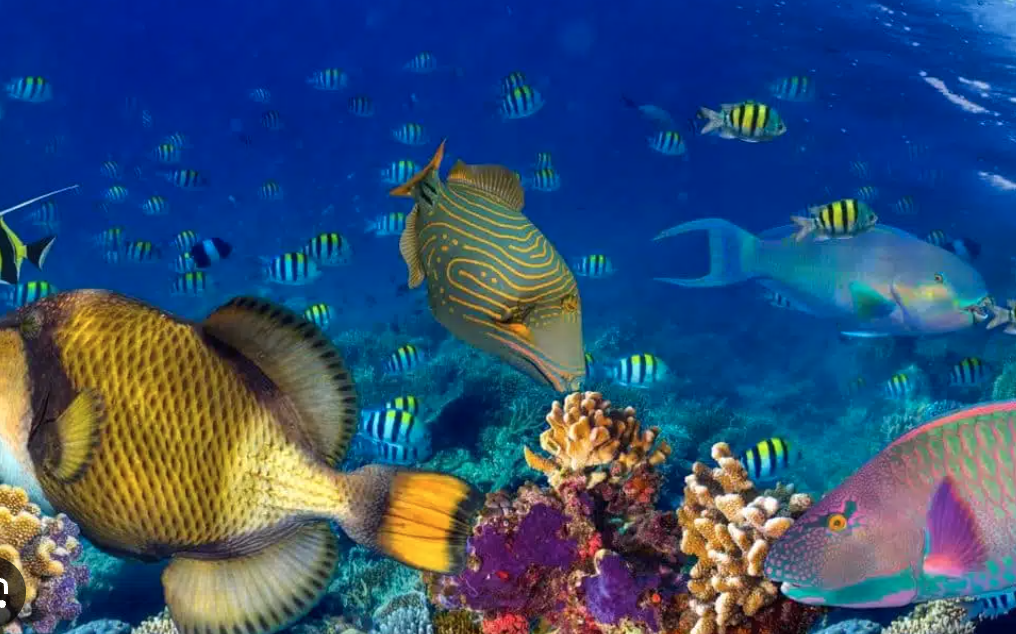
Beim Tauchen in Thailand und Malaysia habe ich Korallenriffe erlebt, die zu den faszinierendsten Naturräumen gehören, die ich je gesehen habe.
Korallenstädte voller Farbe.
Fischschwärme, die sich wie lebendige Wolken bewegen.
Ein Ökosystem, das vor Leben pulsiert.
Diese Begegnungen haben mich so geprägt, dass daraus später sogar mein Kinderbuch entstanden ist:
„Das Meeresabenteuer“ – eine Geschichte über Mut, Entdeckung und die Schönheit unserer Ozeane.
Bei unserem Besuch im CARMABI Research Center auf Curaçao haben wir mit dem Meeresbiologen Cornelis gesprochen.
Er erklärte uns, dass die Wassertemperaturen im Karibischen Meer in den letzten Jahren teilweise fast 30 °C erreicht haben.
Für Korallen ist das eine extreme Belastung.
Korallen leben in Symbiose mit mikroskopisch kleinen Algen, die ihnen Energie und Farbe geben. Wenn das Wasser zu warm wird, stoßen die Korallen diese Algen ab.
Das Ergebnis nennt man Korallenbleiche.
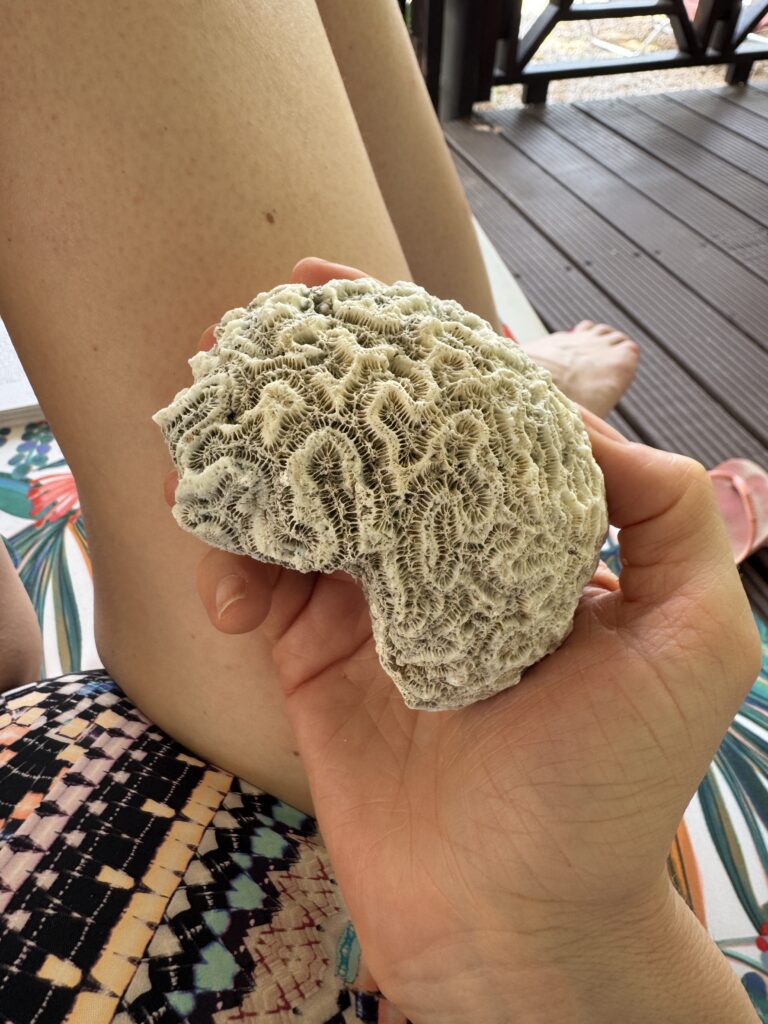
Was zurückbleibt, ist ein weißes Skelett.
Genau das haben wir an vielen Stellen gesehen.
Nicht mehr die lebendigen Riffe, die ich von früher kannte – sondern Überreste eines Ökosystems.
Korallenriffe sind allerdings weit mehr als nur schöne Tauchspots.
Sie beherbergen etwa 25 % aller Meeresarten, schützen Küsten vor Erosion und sind Teil eines komplexen Systems, das letztlich auch mit der Sauerstoffproduktion unserer Ozeane verbunden ist.
Wenn diese Systeme verschwinden, verliert unser Planet nicht nur Schönheit.
Er verliert Stabilität.
Vielleicht hat mich diese Erkenntnis deshalb so berührt, weil ich mich seit vielen Jahren intensiv mit Atem beschäftige.
Denn der Atem verbindet uns tatsächlich mit dem Ozean.
Das klingt poetisch – ist aber eigentlich pure Biologie.
Mehr als die Hälfte des Sauerstoffs, den wir Menschen einatmen, wird von Organismen im Meer produziert – vor allem von winzigen Algen und Phytoplankton.
Der Ozean ist damit eines der größten Atmungssysteme unseres Planeten.
Der Ozean „atmet“ – auch wenn wir es nicht sehen können.
An seiner Oberfläche findet ein ständiger Austausch von Sauerstoff und Kohlendioxid mit der Atmosphäre statt, während Milliarden winziger Meeresorganismen im Wasser Photosynthese betreiben.
Vor allem Phytoplankton, Seegraswiesen und Algen produzieren dabei enorme Mengen Sauerstoff – Schätzungen zufolge stammt mehr als die Hälfte des Sauerstoffs, den wir Menschen atmen, aus dem Ozean.
Korallenriffe spielen in diesem lebendigen System eine besondere Rolle.
Korallen sind zwar Tiere, leben aber in enger Symbiose mit mikroskopisch kleinen Algen, die durch Photosynthese Sauerstoff produzieren und Kohlendioxid aufnehmen.
Dadurch wirken Riffe wie pulsierende Lebenszentren in den Küstenmeeren: Sie fördern lokale Sauerstoffproduktion, speichern Kohlenstoff in ihren Kalkstrukturen und beherbergen rund ein Viertel aller Meeresarten.
In diesem Sinne sind Korallenriffe Teil des „blauen Atemsystems“ unseres Planeten – ein fein abgestimmtes Netzwerk aus Wasser, Licht und Leben, das unser Klima stabilisiert und jeden zweiten Atemzug auf der Erde ermöglicht.
Aus diesem Grund machen wir mit unserem personalierten Kinderbuch Das Meeresabenteuer aufmerksam auf die Gesundheit unserer Meeres. Wir zeigen Kindern am Beispiel einer inspirierenden Geschichte einer Schildkröte, was sie selbst tun können unsere Ozeane zu schützen. Mit dem Code FREUND10 erhältst du 10% Discount auf deine Bestellung.
Mehr erfahren über den Zusammenhang zwischen der Atmung unseres Planeten und deiner eigenen kannst du in meinen Buch Breathwork – die Magie deiner Atmung.
Ich freue mich darauf von Dir zu hören!
English Version
Breath connects us with the ocean
I expected my first week in Curaçao to make me mostly happy.
Caribbean beaches.
Turquoise water.
Warm air and palm trees.
And yes — much of it is exactly as beautiful as people imagine.
But at the same time, this first week has also made me unexpectedly sad.
Because between the stunning beaches and the sparkling sea, I became very aware of the overheated state of our planet.
Over the past few days I received many messages:
“What is Curaçao like?”
“Is it as paradisiacal as people imagine the Caribbean to be?”
The answer is: yes.
And at the same time, not quite.
Perhaps this touches me so deeply because my connection with the ocean began many years ago.
About twelve years ago I completed my diving certification in Southeast Asia — without knowing that this experience would lead to some of the most extraordinary encounters with nature I have ever had.
While diving in Thailand and Malaysia I saw coral reefs that remain among the most fascinating natural environments I have ever experienced.
Cities of coral full of color.
Schools of fish moving like living clouds.
An ecosystem pulsating with life.
These encounters shaped me so deeply that they later even inspired my children’s book:
“The Ocean Adventure” — a story about courage, discovery and the beauty of our oceans.
During our visit to the CARMABI Research Center on Curaçao we spoke with marine biologist Cornelis.
He explained that water temperatures in the Caribbean Sea have reached nearly 30°C in recent years.
For corals this represents extreme stress.
Corals live in symbiosis with microscopic algae that provide them with energy and color. When the water becomes too warm, corals expel these algae.
The result is what scientists call coral bleaching.
What remains is a white skeleton.
And this is exactly what we saw in many places.
Not the vibrant reefs I remembered — but the remains of an ecosystem.
Yet coral reefs are far more than beautiful diving sites.
They host about 25% of all marine species, protect coastlines from erosion and are part of a complex system that is ultimately connected to the oxygen production of our oceans.
When these systems disappear, our planet loses more than beauty.
It loses stability.
Perhaps this realization touches me so deeply because I have spent many years exploring the power of breath.
Because breath truly connects us with the ocean.
It may sound poetic — but it is actually pure biology.
More than half of the oxygen we humans breathe is produced by organisms in the ocean, mainly tiny algae and phytoplankton.
The ocean is therefore one of the largest breathing systems on our planet.
The ocean “breathes” — even if we cannot see it.
At the ocean’s surface there is a constant exchange of oxygen and carbon dioxide with the atmosphere, while billions of microscopic organisms perform photosynthesis in the water.
Phytoplankton, seagrass meadows and algae produce enormous amounts of oxygen — scientists estimate that more than half of the oxygen humans breathe comes from the ocean.
Coral reefs play a special role in this living system.
Corals themselves are animals, but they live in close symbiosis with microscopic algae that produce oxygen and absorb carbon dioxide through photosynthesis.
In this way reefs act like pulsating life centers in coastal oceans: they support local oxygen production, store carbon in their limestone structures and host roughly a quarter of all marine species.
In that sense coral reefs are part of the “blue breathing system” of our planet — a delicate network of water, light and life that helps stabilize Earth’s climate and makes every second breath on this planet possible.
That’s why, with our personalized children’s book The Ocean Adventure, we raise awareness about the health of our oceans. Through the inspiring story of a sea turtle, children learn what they themselves can do to help protect our oceans. With the code FRIEND10, you receive 10% off your order.
Want to also experience the healing and magical effects of the ocean – without needing to jump into the water? Dive into the beauty of the ocean and experience a transformative breath journey. Join our Ocean Breathwork and get high on your own supply.
Leave a Reply